
Sanitary District of Decatur (SDD) and City of Decatur Launch Integrated Planning Process
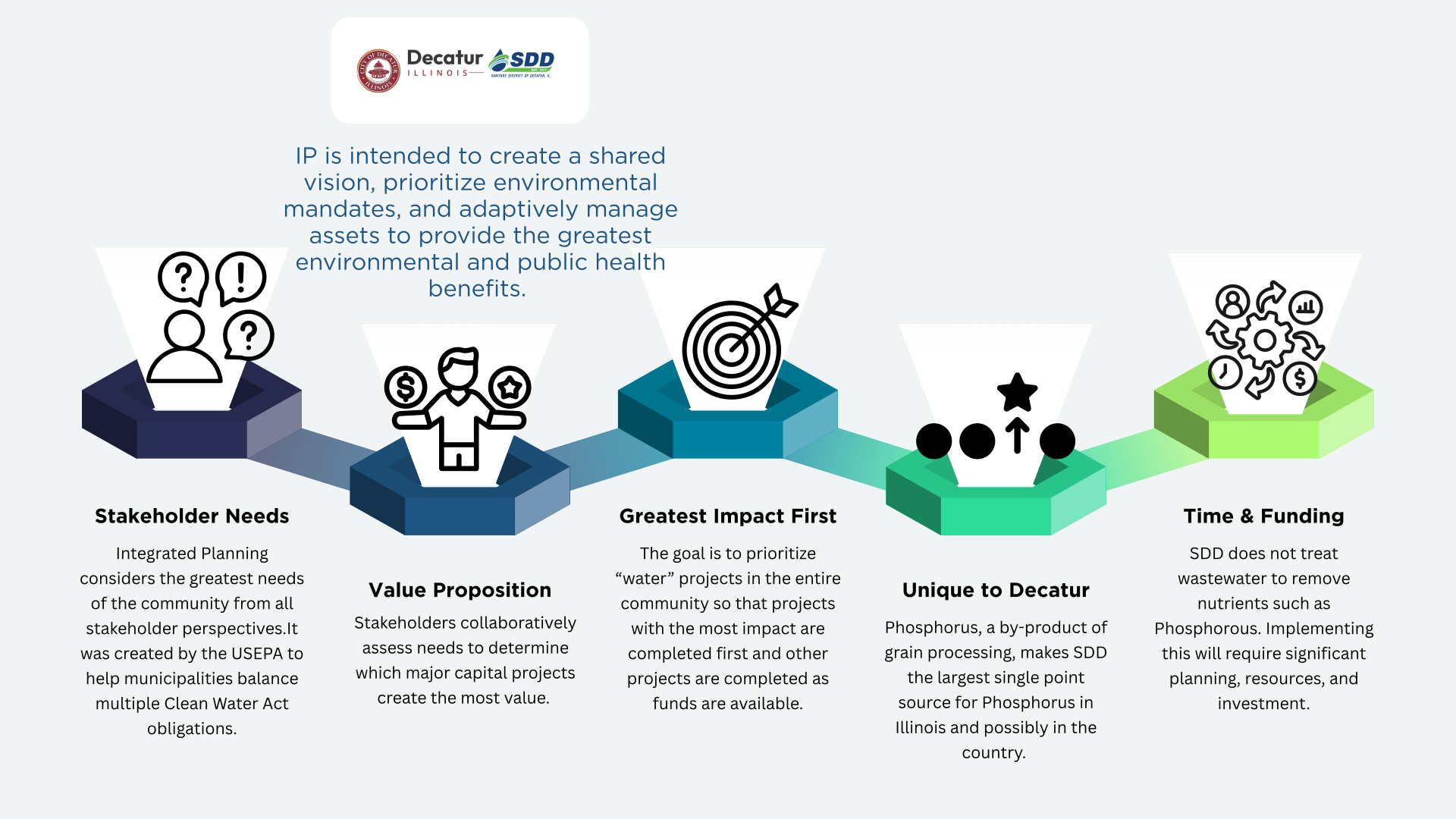
The federal Clean Water Act (CWA) and Safe Drinking Water Act (SDWA) are the basis of everything SDD and City of Decatur do to provide clean and safe water resources. However, CWA and SDWA mandates, and local needs often compete for time and limited resources. That’s why in 2012 the United States Environmental Protection Agency (USEPA) created a framework to help stakeholders prioritize water projects that bring the most value to everyone at the table. SDD and City of Decatur recently agreed to launch this process – the first of its kind in Illinois — because of multiple water system challenges associated with aging infrastructure in a community with a declining population.
An issue unique to Decatur
As humans, we worry about whether we are getting the right nutrients from the food we eat. Fertilizer contains high levels of nitrogen and phosphorous, which are excellent nutrients for plants on land, but which also stimulate aquatic plant growth once they reach a body of water. When soaring summer temperatures and bright sunlight meet water with high levels of these elements, the perfect conditions for rapid algal growth are set. Typically these algal blooms occur in shallow, still water like ponds, slow-moving riverbanks, or decorative, non-chlorinated pools. The nitrogen and phosphorous enter these bodies of water via runoff from farms, chemically treated lawns, and storm sewers. Algal blooms can rapidly grow out of control, producing toxins or depleting the oxygen level in water as they decay, killing freshwater animals and plants, and potentially causing human illness.
Decatur is unique in the state, and possibly the nation, for the levels of phosphorus in our effluent. Phosphorus is one of the byproducts of grain processing. While the surrounding region produces vast quantities of grain, additional grain is imported for processing by the globally significant agricultural processing facilities located in Decatur. The wastewater from those facilities is treated on-site then sent to SDD for final treatment. Because phosphorus is a naturally occurring element that supports life rather than a traditional contaminant that harms life, its removal has not been required to the same extent as other pollutants.
The Integrated Planning framework is invaluable for building trust and collaboration among stakeholders when there are multiple issue viewpoints.
The Illinois Environmental Protection Agency (IEPA) included an interim total phosphorus limit of 1.0 mg/L and an ultimate limit of 0.5 mg/L in SDD’s Sangamon River discharge permit with a multiple-year compliance schedule. The 1.0 mg/l will be feasible with current technology, but the 0.5 mg/l will be a difficult limit to meet. Cities in the Midwest like Decatur have many water-related needs including combined sewers in older parts of the city where stormwater and sewage share a pipeline, lead and copper service lines that need to be replaced, changing weather patterns creating both droughts and extreme rainfall events, emerging contaminants such as chlorides, PFAS, pharmaceuticals and microplastics etc. SDD and City of Decatur want to ensure tax dollars are allocated to projects that have the greatest impact on quality of life for our customers.
Cost-Benefit Analysis
The intent of the Integrated Plan is to evaluate whether achieving effluent concentrations below 1.0 mg/L constitutes the highest-priority environmental benefit for the Decatur area before additional capital investment and operational measures are undertaken to attain a more stringent effluent limitation. Over the next few years, we will be sharing more information about the Integrated Planning process and asking for stakeholder input.
In the meantime, everyone can do something to help us reach our goal of diminished nutrients. Farmers are encouraged to use cover crops such as alfalfa, which binds nitrogen to the soil and prevents loss from runoff. Another agricultural strategy is to install woodchip bioreactors at the edges of fields. These woodchip-filled areas collect runoff water and provide denitrification without sacrificing growing area. Consumers can support this excess nutrient initiative by buying local from farmers who employ these strategies, and by advocating for financial and technological support for farmers to adopt these practices. At home, minimize the fertilizer used for that lush grass lawn or that vegetable garden, and support watershed protection in general.
Interested in receiving more information? Subscribe to our quarterly newsletter.